 English
 français
 Deutsch
 Español
 italiano
 русский
 português
 العربية
 ไทย
 tiếng việt
 Pilipino


What are you looking for?

Cabinet Lighting System Guide: LED Drivers, Smart Controls, and Wiring
Cabinet lighting rarely stops at a single LED strip. For kitchen runs, wardrobes, display cases, and architectural millwork, treating lighting as a cohesive system—power supply, switching, and fixtures engineered together—cuts assembly time on the factory floor, prevents field failures, and delivers a consistent control experience for the end user.
What Is a Cabinet Lighting System?
A complete cabinet lighting setup integrates low-voltage fixtures, drivers, switches, and modular distribution wiring into a single matched package. Beyond basic illumination, it ensures steady DC voltage across every run and eliminates messy on-site wire splicing across single units or large cabinet banks.
A typical system centers on five core elements:
Fixture selection depends on cabinet geometry, mounting depth, and light distribution requirements:
LED Strip Lights
Run these flexible strips wherever you need a continuous line of light. They work equally well as soft shelf accents or high-output task lighting over a prep counter. You can cut and place them under wall cabinets, inside wardrobes, along baseboards, or through retail display cases.
You shouldn't have to fight messy wiring between cabinet boxes. These connectors and jumpers give you a clean way to wrap around 90-degree corners, bridge runs across adjacent units, and tie your leads straight back to the power supply.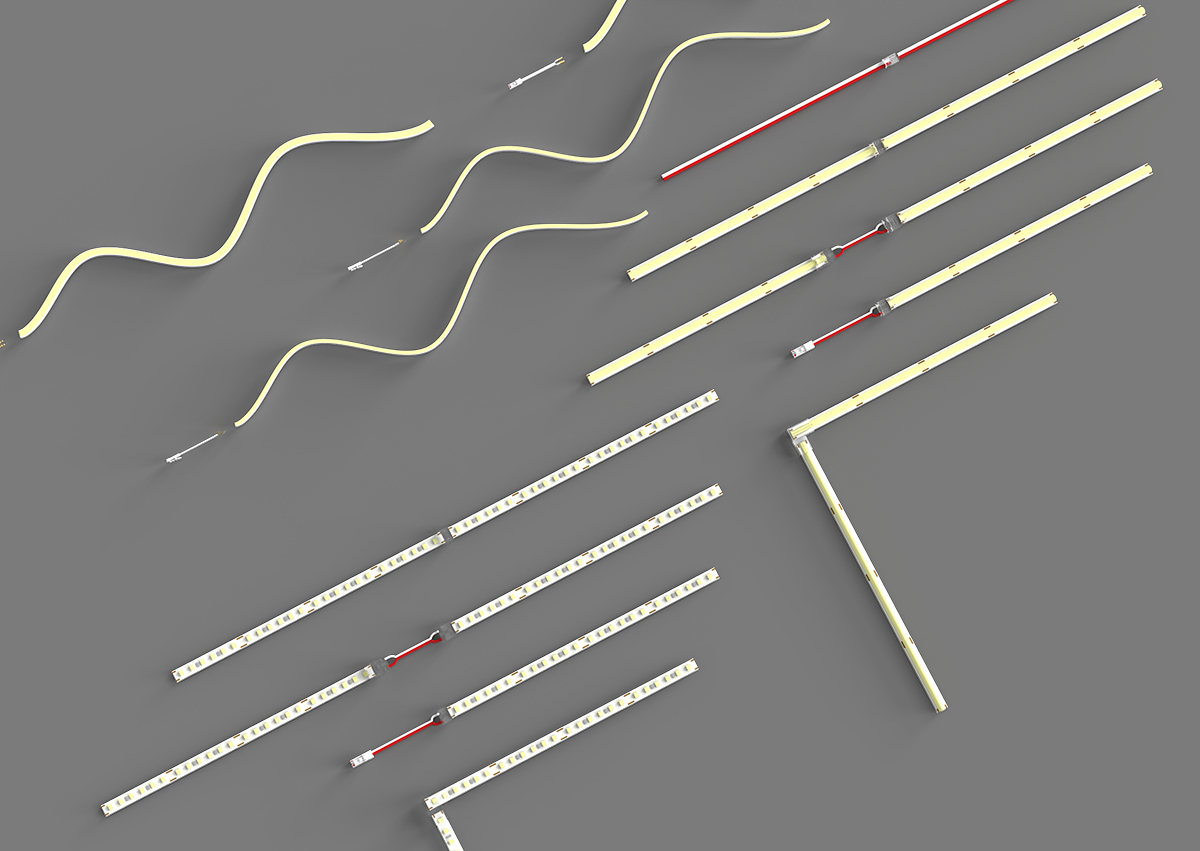
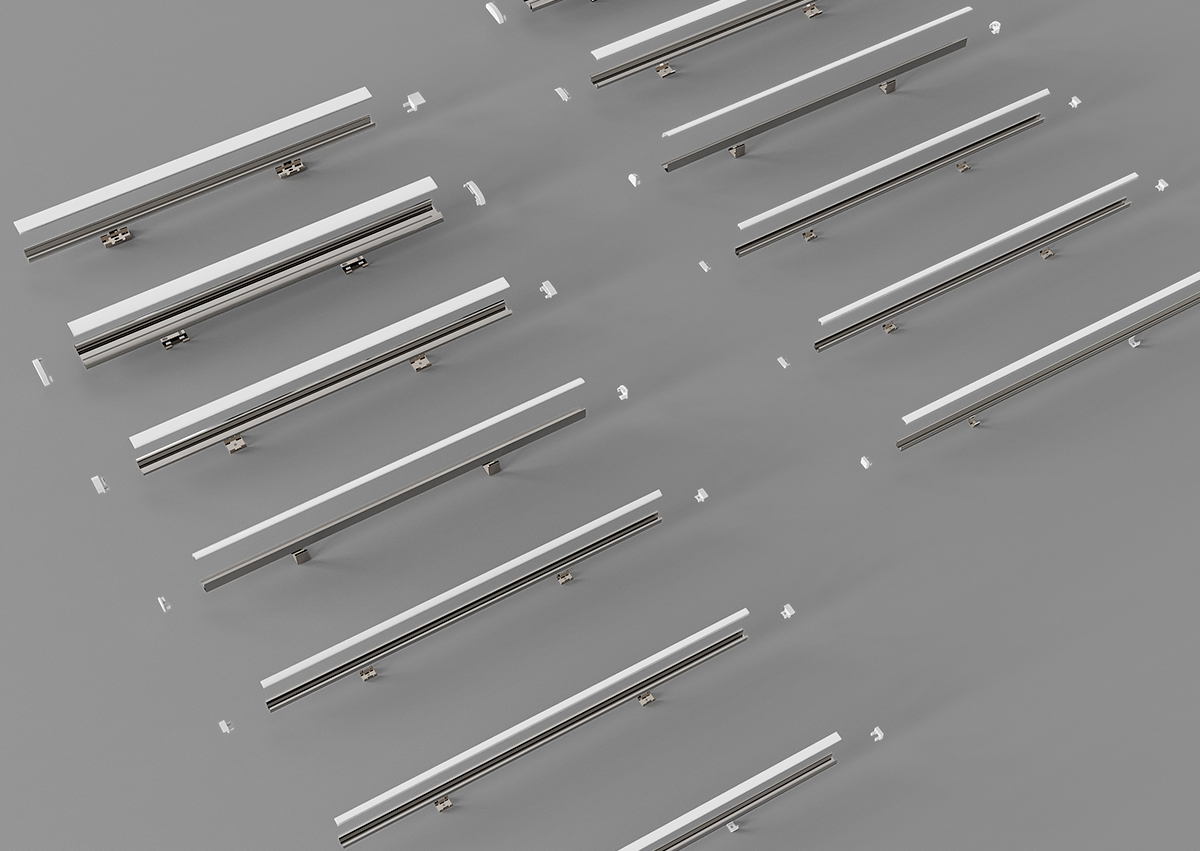
Mounting strips inside an aluminum extrusion solves two common job-site headaches: the frosted cover blends away diode hotspots into an even, continuous bar of light, while the channel shields the PCB from dust, bumps, and kitchen grease.
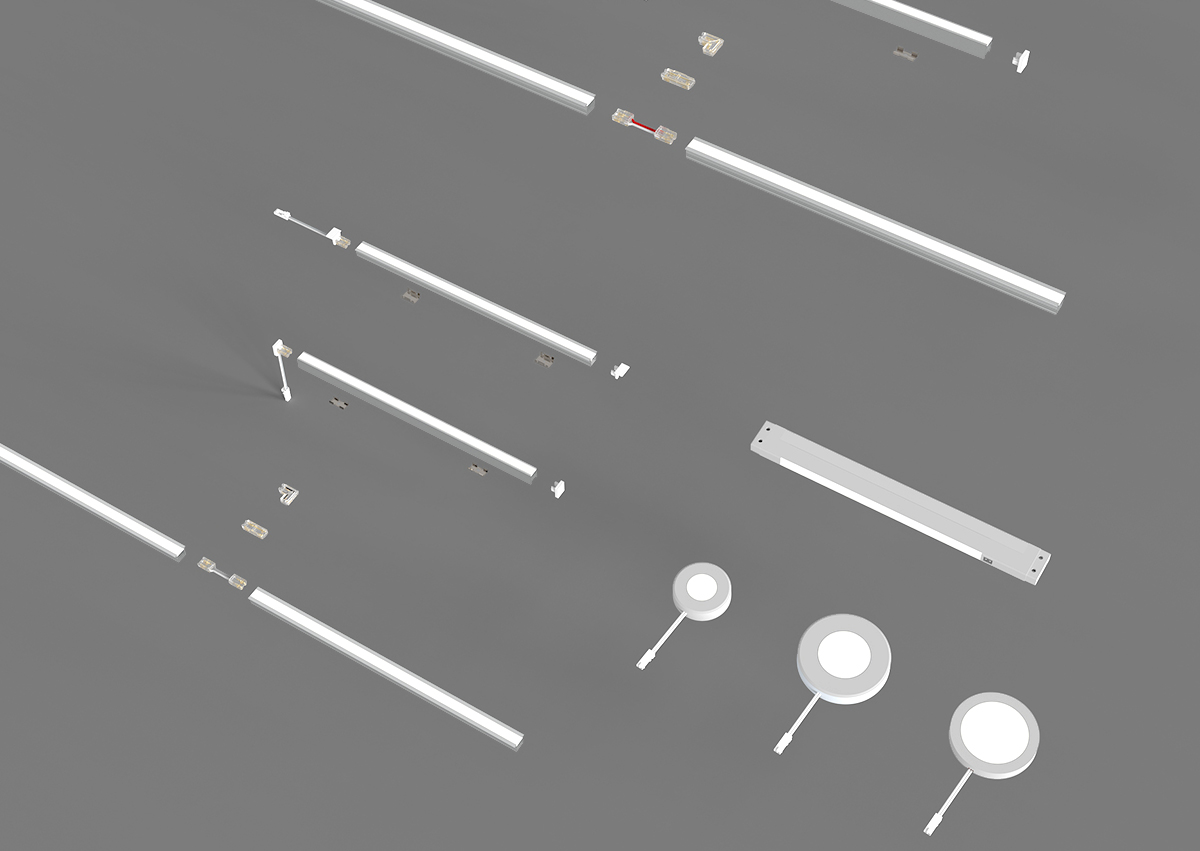
For spots where a standard light strip doesn't fit the build, use dedicated fixtures. You can skip the soldering iron with solderless linear lights to speed up assembly, drop compact puck lights directly over prep counters, add drawer sensor lights that turn on the moment you pull the box open, or mount triangular lights into upper-cabinet corners to aim light forward onto the work surface.
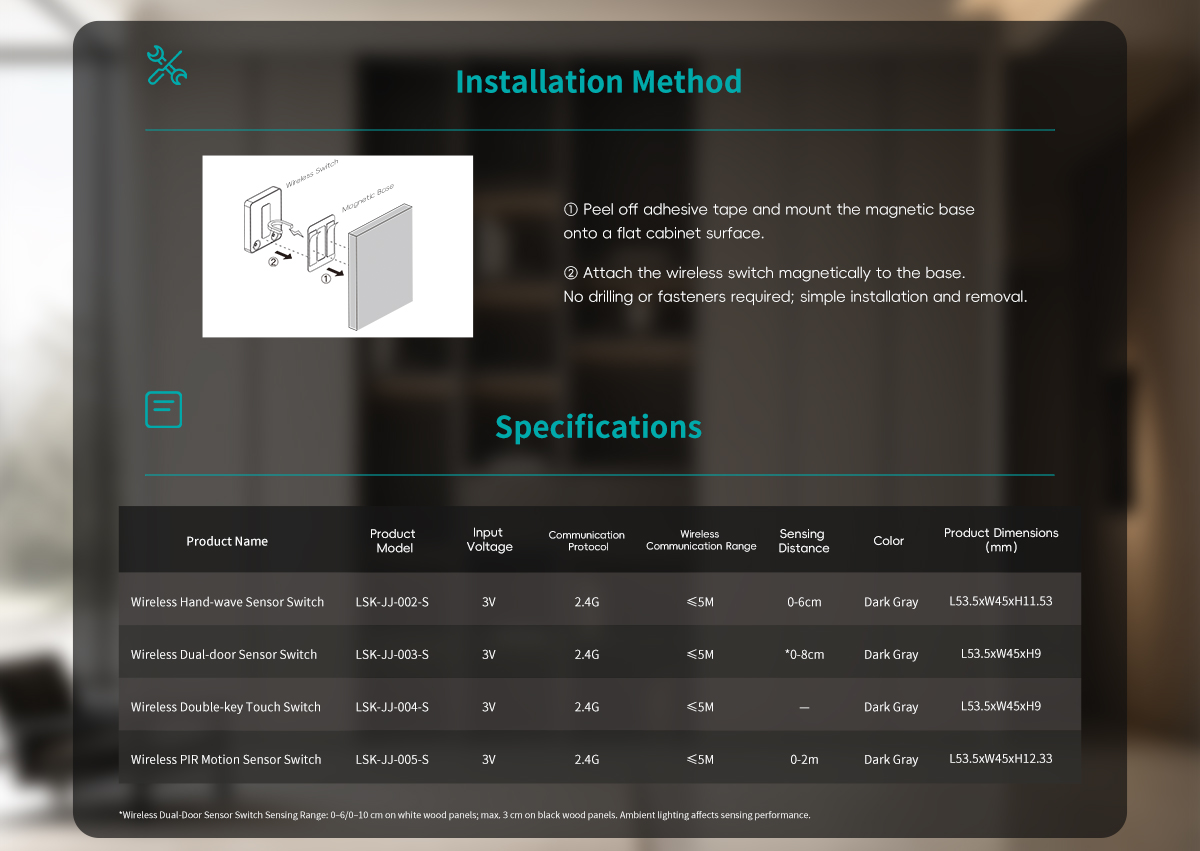
Control methods should align with everyday cabinet interaction and door mechanics:
· Door Sensors: Contact/magnetic switches that trigger lights automatically when cabinet doors or drawers open.
· PIR Motion Sensors: Hands-free infrared detection designed for walk-in closets, pantries, and dressing rooms.
· Touch Switches & Dimmers: Low-profile touch points mounted into cabinet panels or profile edges for tactile on/off and smooth step-less dimming.
· Hand-Wave Proximity Sensors: Non-contact optical switches that let users trigger lights with wet or messy hands—ideal for kitchen prep areas.
Depending on your cabinet layout, you can control the sensors individually or group them together. Both setups support dimming and color temperature tuning.
The driver steps down mains AC voltage to regulated 12V or 24V DC for your fixtures. When selecting and sizing a driver for your cabinet setup, keep these key checkpoints in mind:
· Output Voltage: Match the voltage to your fixture rating (choose 12V for short runs; opt for 24V on longer runs so you minimize voltage drop).
· Wattage Sizing: Calculate your total strip wattage and maintain a standard continuous-load buffer (we recommend you load the driver up to 80% of its rated capacity).
· Multi-Port DC Output: If you are powering multiple cabinet bays, shelves, or puck lights, an integrated multi-port configuration (e.g., 4-port or 6-port) lets you plug each run directly into a single power supply without external junction boxes or wire splices.
· Terminal Configuration: Choose based on your wiring layout. A single-output driver requires you to add an external distribution hub, whereas a multi-port driver gives you dedicated plug-and-play sockets for each fixture run.
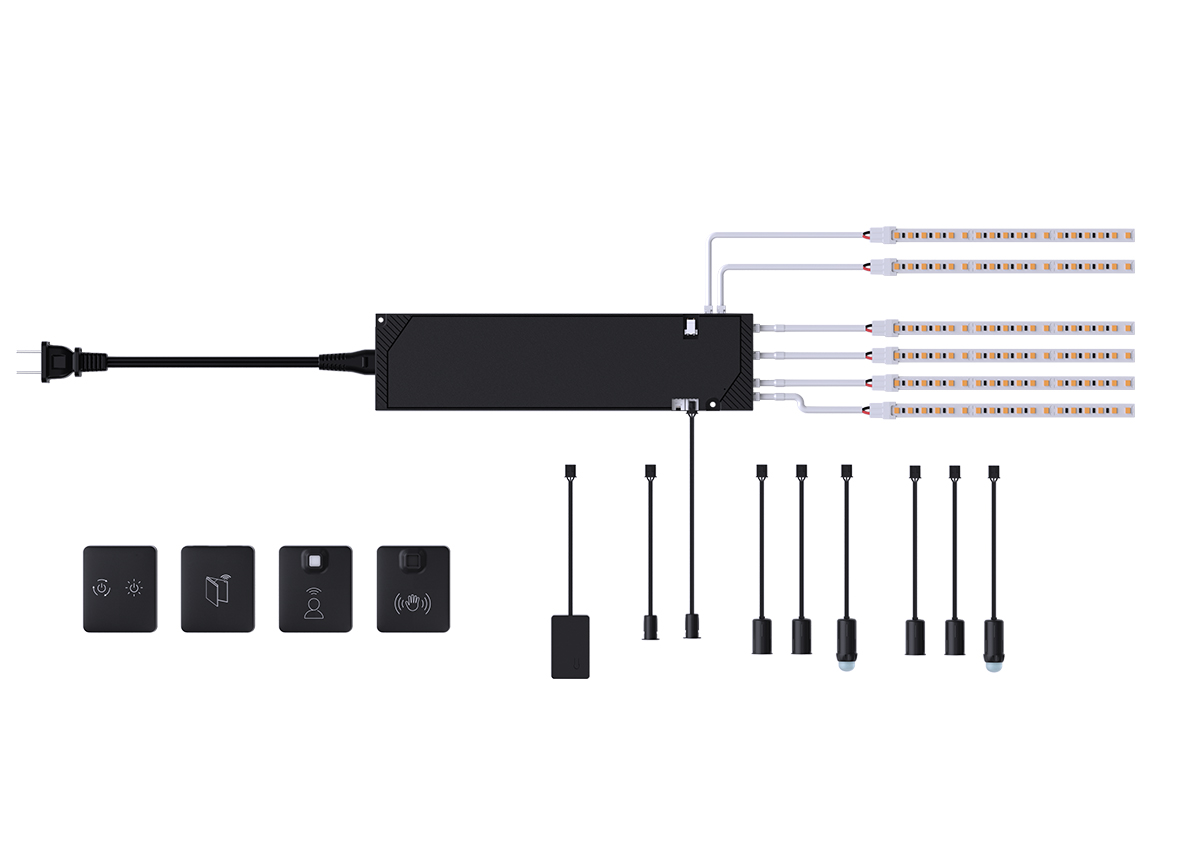
Quick-connect wiring dictates how fast cabinets can be assembled on the shop floor or connected on-site.
Multi-port drivers allow each run to plug directly into the power unit without terminal blocks or soldering. For complex cabinetry, secondary junction hubs and splitter cables route power to multiple shelves, while sub-control boxes allow individual cabinet bays to be switched independently or grouped under a single master switch.
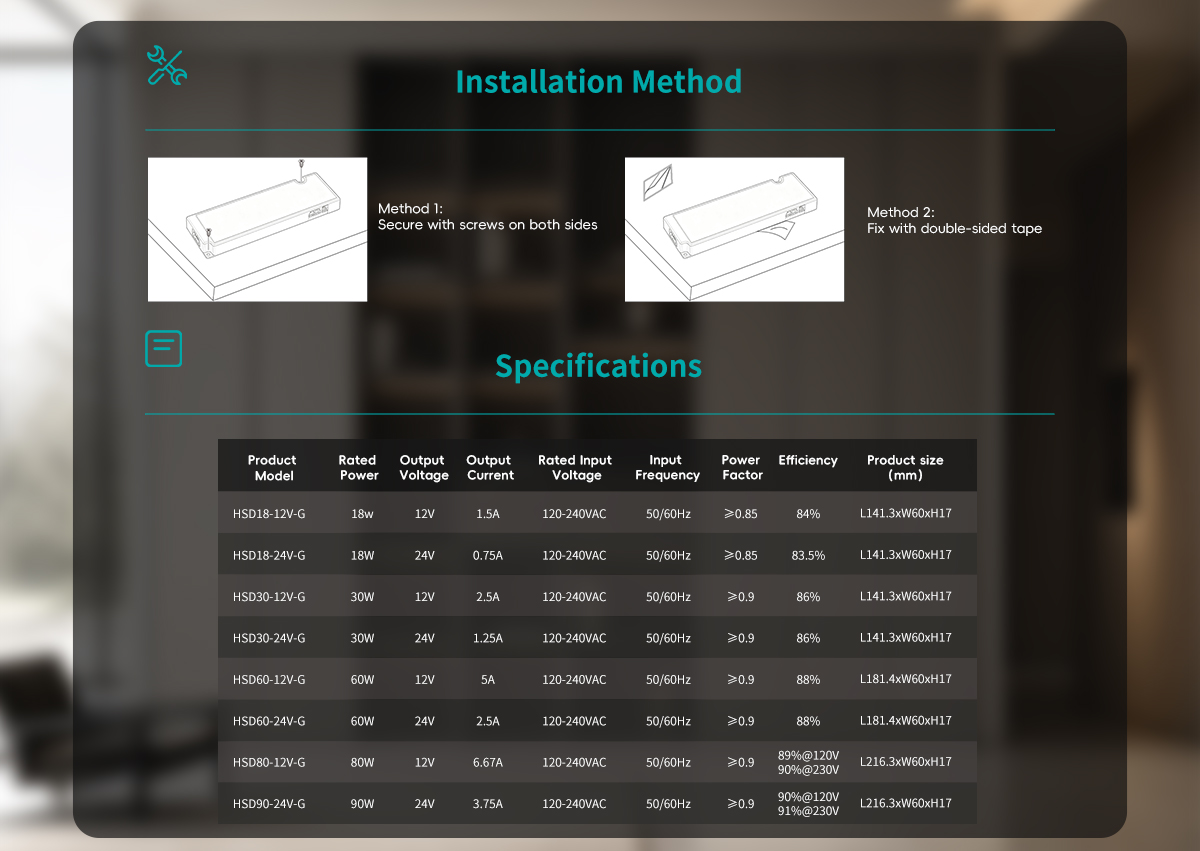
The installation method affects the final aesthetics and ongoing maintenance of the cabinet lighting system:
· Driver Mounting: Secure drivers with screws or high-bond adhesive tape inside service cavities.
· Recessed Power Boxes: Power access junction boxes can be recessed into the cabinet plinth, top panel, or false back.
· Cable Management: Low-profile cable clips, pre-milled wire channels, and silicone pass-through grommets keep partition crossings clean and prevent hinge pinch points.
1.Better System Compatibility
The luminaire voltage, driver output, power, current, connectors, and controller must be compatible with one another to prevent installation issues caused by mismatched components.
2. Improved Cabinet Assembly Efficiency
No need for complex on-site wiring. Multi-port drivers combined with pre-wired solutions are integrated into standardized modules.
3. Easy Expansion for Multiple Light Locations
Whether for a single kitchen cabinet, a whole-house project, or a commercial display project, the system can be flexibly expanded based on lighting zones, load capacity, and control requirements.
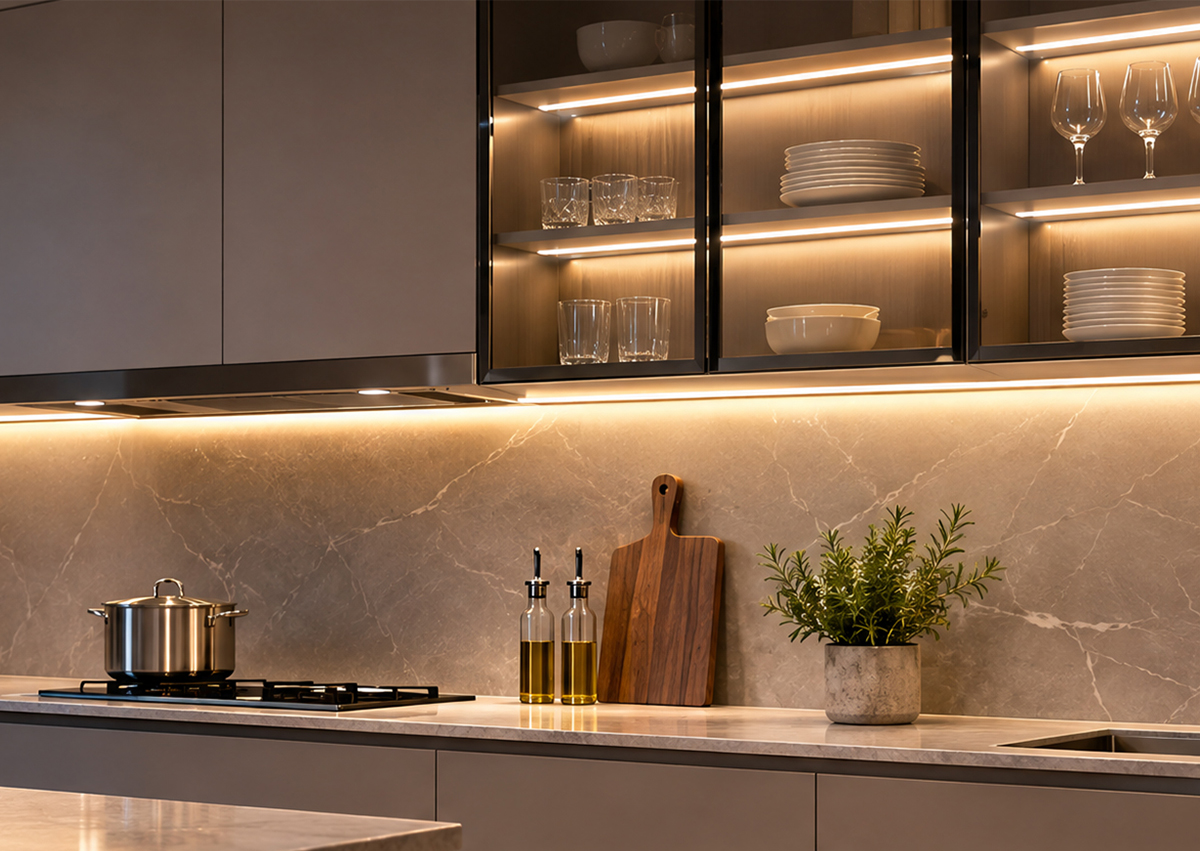
Primary zones include upper under-cabinet task lights, open display niches, and breakfast bars.
· Fixtures: High-CRI (≥90) linear profiles with angled diffusers to wash countertops without glare.
· Controls: Hand-wave proximity sensors prevent fingerprints on cabinet surfaces.
· Wiring: Multi-output drivers power divided upper cabinets on either side of a range hood without long home runs.
Automatic lighting is required, and wiring must be neatly routed through shelves:
· Fixtures: Recessed aluminum profile lights luminaires with diffused covers.
· Controls: Recessed door switches trigger lighting in each zone when doors open; PIR sensors activate walk-in dressing areas.
· Wiring: Vertical cable channels pre-milled inside cabinet side panels connect multi-tiered shelves to drivers concealed within the top panel.
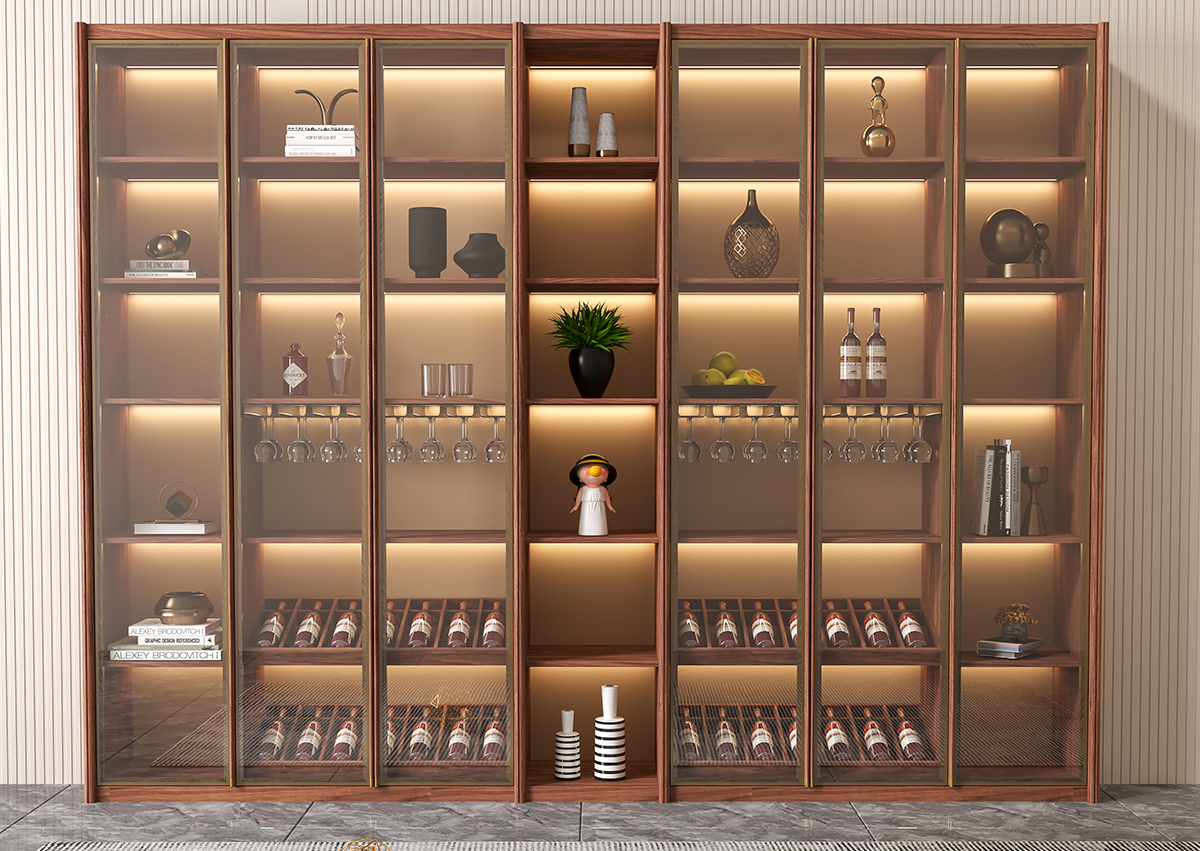
Focuses on glare-free illumination where back panels and glass shelves offer few places to hide wiring:
· Fixtures: Micro-profiles or edge-lit glass shelf clips with dotless COB tape.
· Controls: Dimmable controls let users shift between daytime showcase lighting and subdued evening ambience.
· Power: Slimline drivers concealed within plinths, false tops, or service cavities.
Whole-home custom cabinetry—spanning kitchens, walk-in closets, bathroom vanities, sideboards, and entertainment centers—requires a unified, job-specific electrical package rather than piecemeal parts. We provide tailored lighting systems engineered directly around your cabinet shop drawings and joinery specifications:
· Zone-by-Zone Power Planning: Dedicated driver locations for each functional area eliminate long DC runs and keep voltage drops within strict limits.
· Custom-Cut Profiles & Pre-Terminated Harnesses: Extrusions cut to exact cabinet bay widths, paired with factory-terminated cables tailored to your panel pass-through and CNC routing specs.
· Consistent Color Temperature: Stringent LED binning guarantees a uniform light tone across every cabinet section, regardless of room or circuit.
· Synchronized Control Integration: Hybrid switching architecture allows individual cabinet bays to trigger via local sensors, while supporting master feeds linked to whole-house smart controls or wall switches.

Best for standalone vanities, pantry units, or single display cases.
· Topology: One driver feeds a single continuous tape or puck light through an in-line switch or wireless receiver.
· Advantage: Minimal component count, rapid bench assembly, zero external distribution blocks.
2. Multi-Zone Master-Distribution System
Designed for divided wardrobes, multi-tier shelving, and kitchen uppers.
· Topology: A single multi-port driver feeds multiple fixtures directly. A master sensor switches all channels simultaneously, or individual zone sensors control separate bays.
· Advantage: Consolidates the power supply into one location while standardizing wire harness lengths.
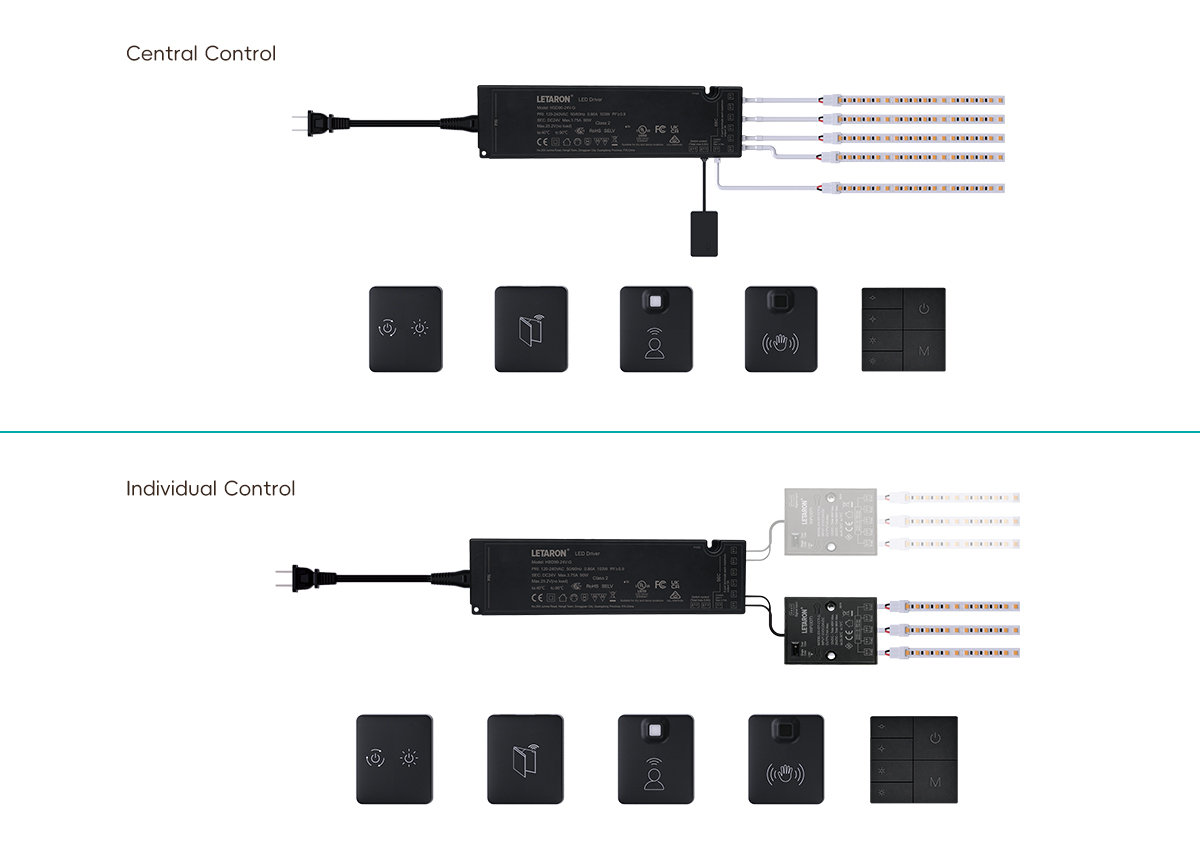
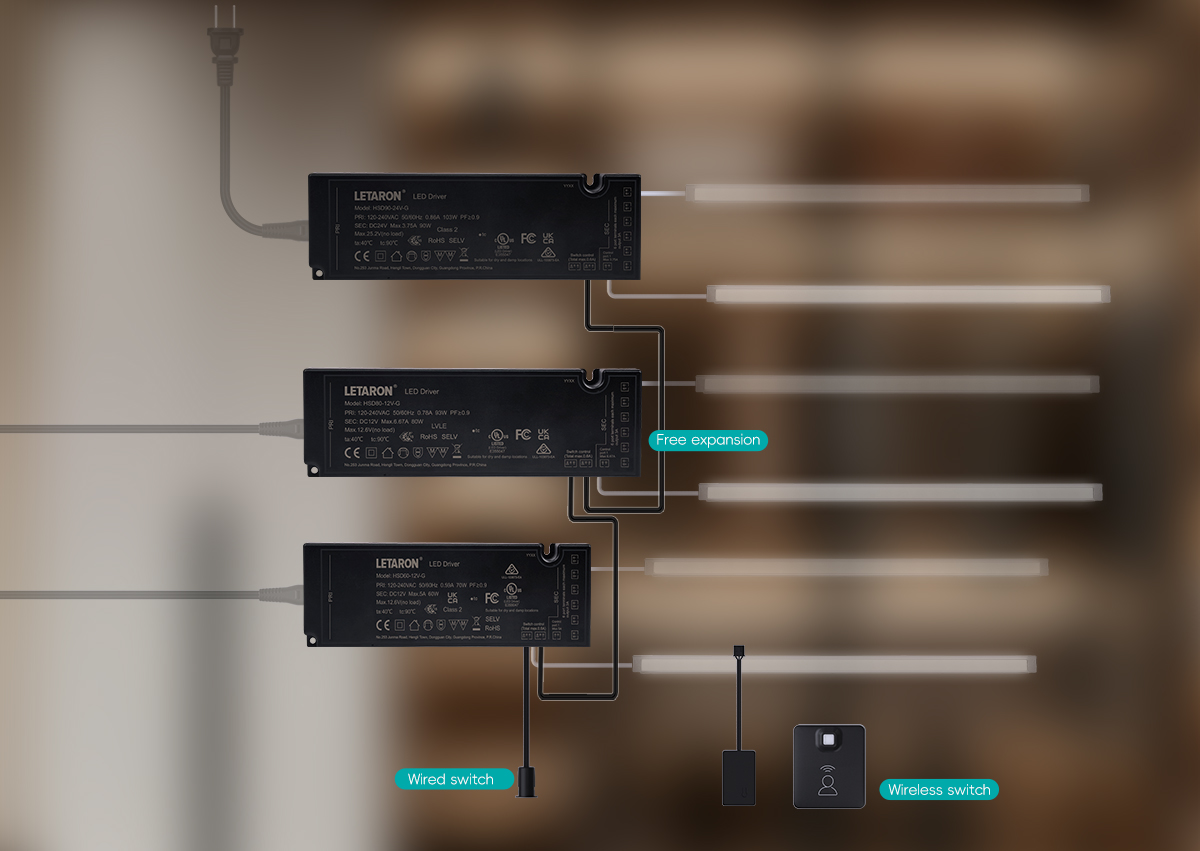
Used for extensive millwork runs spanning entire walls or multiple rooms.
· Topology: Multiple drivers are distributed across distinct cabinet banks, synchronized through low-voltage signal lines or wireless RF controllers.
· Advantage: Prevents long DC wire runs and voltage drop while keeping room-wide lighting behavior in sync.
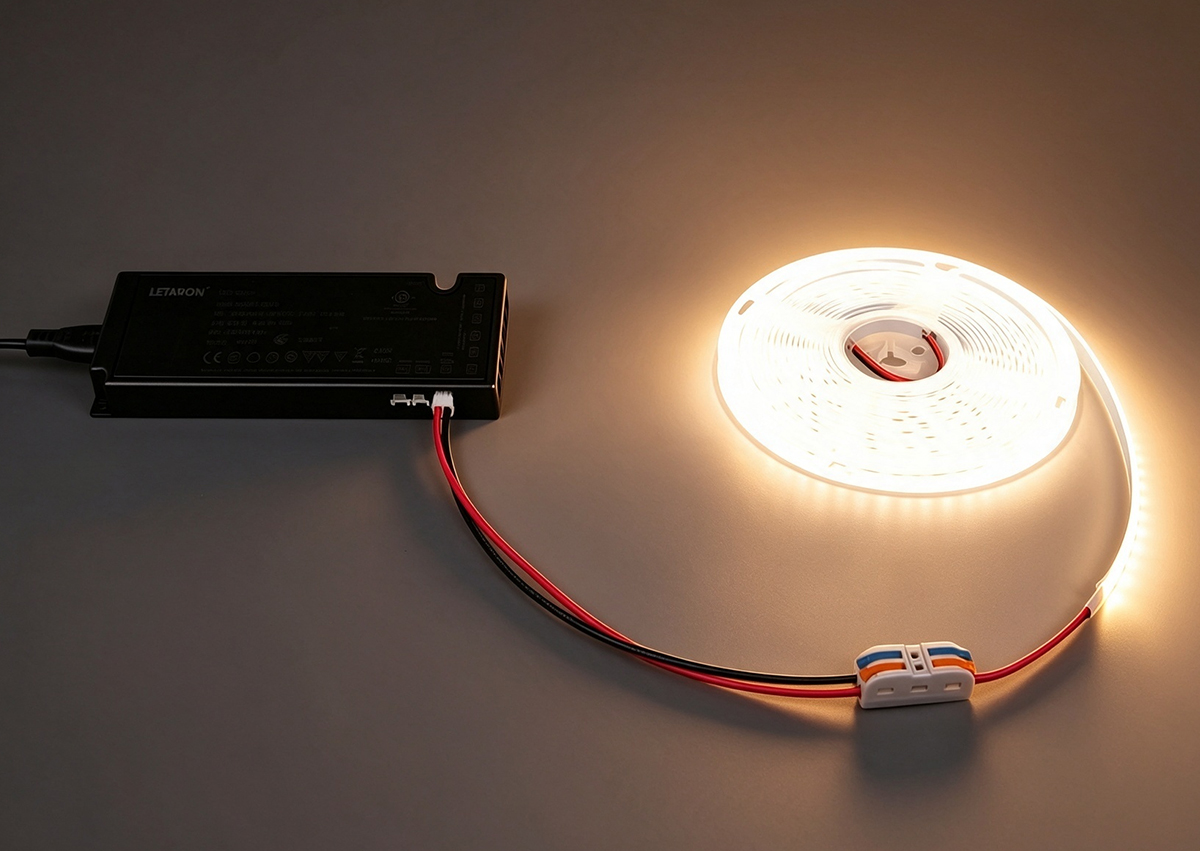
Specified for high-lumen commercial showcases, extensive indirect cove lighting, or dense high-wattage COB runs.
· Topology: Uses heavy-gauge quick-connects and high-capacity terminal interfaces engineered to handle sustained 5A+ loads safely.
· Advantage: Delivers high luminous flux across long runs without terminal overheating or premature driver shutdown.
A: Just share your cabinet layout, total strip length or light count, whether you need 12V or 24V, and your switch preference (touch, door sensor, PIR, or hand-wave). We will calculate the right wattage and port count from there.
A: Yes. As long as the total wattage stays under 80% of the driver's capacity, you are good to go. Multi-port drivers let you plug runs directly into the unit without messy wire nuts.
A: Yes. Based on your cabinet layout, we compile a full BOM covering drivers, Sensors,LED profiles, quick-connect cables, distribution hubs, and mounting accessories so components arrive ready for shop-floor assembly.
A: Sure. Tell us what you want to achieve, and we will plan out the driver locations, balance the electrical load, and keep your voltage drops in check.
A: Beyond custom logos and packaging, we can customize wire harness lengths, connectors, profile cuts, and sensor housings to fit your specific cabinet joints.
Q6: Are sample kits and technical datasheets available for prototyping?
A: Yes. We can send you working samples of the drivers, switches, and profiles with full wiring drawings so you can test them on your mock-ups.
Engineering & Sourcing Support from CHALAAT
CHALAAT works directly with cabinet manufacturers, furniture brands, and commercial contractors to engineer turnkey low-voltage lighting systems. Share your cabinet drawings, target wattage, and control preferences, and our team provides:
· Complete matched BOMs (drivers, profiles, sensors, and harnesses)
· Driver load calculations and voltage-drop verification
· Plug-and-play wiring schematics ready for factory assembly

The maximum supported file size is 10MB, for larger attachment or multiple files Bang Phli District, Samut Prakan Province, Thailand.
Please contact us for better tranfer channels!